AI in Digital Marketing: How Businesses Are Automating Growth in 2025
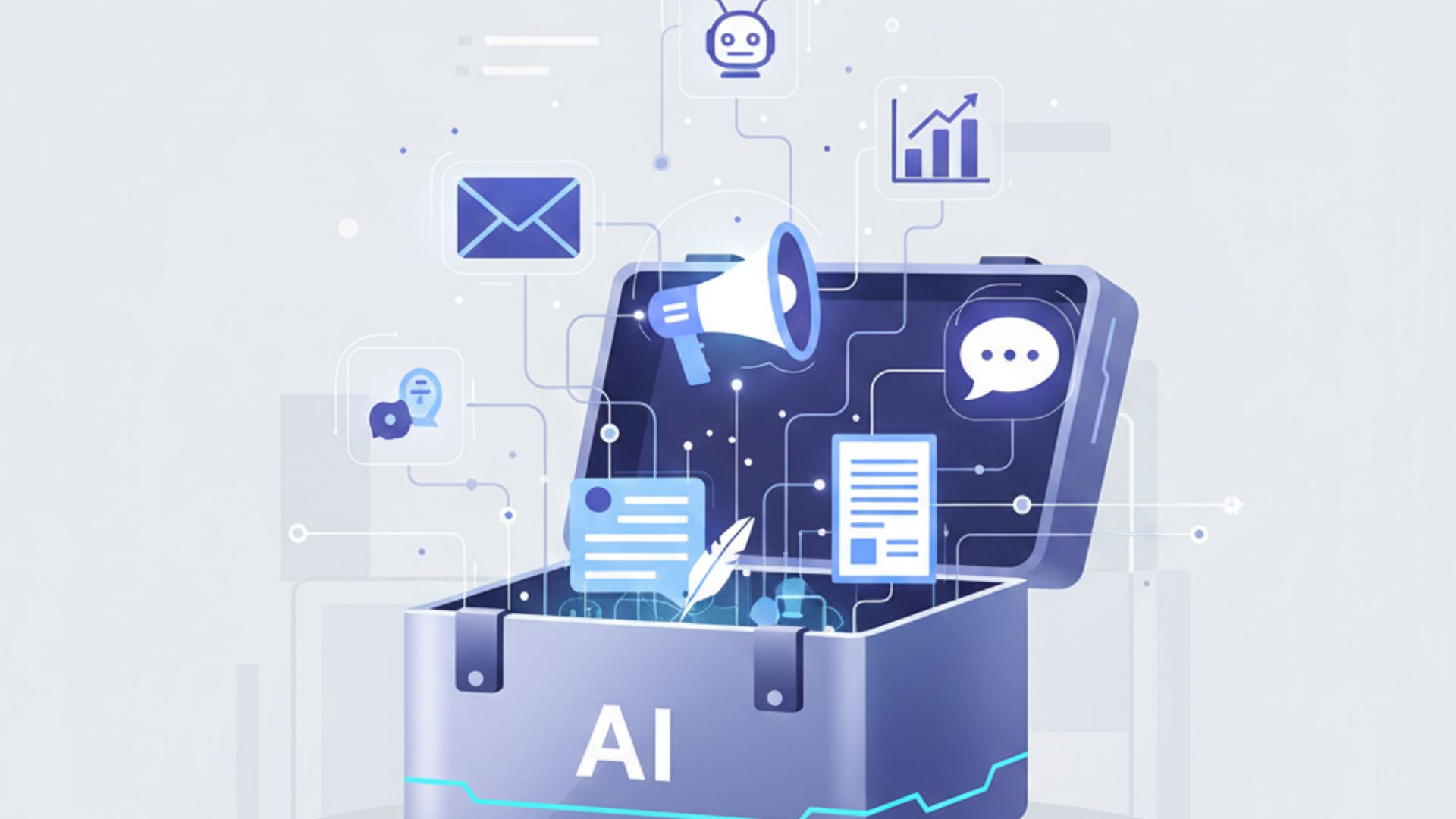
AI was a buzzword a few years ago. Now it is the toolbox. If you run a startup, lead a marketing team, or build a SaaS product, you probably feel the pressure to use AI but not just for the sake of it. The real challenge is learning how to use an AI video maker and other AI tools to automate growth and personalize marketing campaigns.
In this post I'll walk through practical ways teams are using marketing automation AI and generative AI in marketing in 2025. I’ll share tools, tactics, common mistakes, and a plan you can adapt in the next 90 days. I write as someone who has helped marketing teams move from experiments to repeatable processes. I’ll be honest about what works, what costs time, and where teams trip up.

Why AI matters for digital marketing right now
Let's be blunt. Customer expectations have climbed. People expect relevant messages, fast responses, and content that feels tailored. At the same time, growth teams need to move faster with fewer resources. AI helps on both fronts. It speeds up content creation, surfaces insights from messy data, and automates repetitive decisions so humans can focus on strategy.
I've noticed three shifts driving adoption in 2025:
- Generative models are good enough. They create long-form content, ad variations, and landing copy that only need light editing.
- Operational AI is maturing. You can automate end-to-end flows, from lead scoring to follow up messaging, with fewer brittle integrations.
- AI-driven customer engagement is expected. Chatbots, personalized emails, and dynamic website experiences are table stakes for fast-growing companies.
If your team is grinding on manual tasks, marketing automation AI is not optional anymore. But where to start? Read on.
Core AI capabilities every growth team should understand
AI is not a single thing. Think in terms of capabilities. Each capability translates to specific wins for marketing teams.
- Content generation, using generative AI in marketing, to produce blog drafts, ad copy, and creative variations.
- Audience prediction, models that score leads and identify high-value segments.
- Personalization, delivering content and offers tailored to individual behaviors and signals.
- Conversational automation, chat and messaging that handle inquiries and route leads.
- Analytics automation, auto-generated insights and anomaly detection in campaign performance.
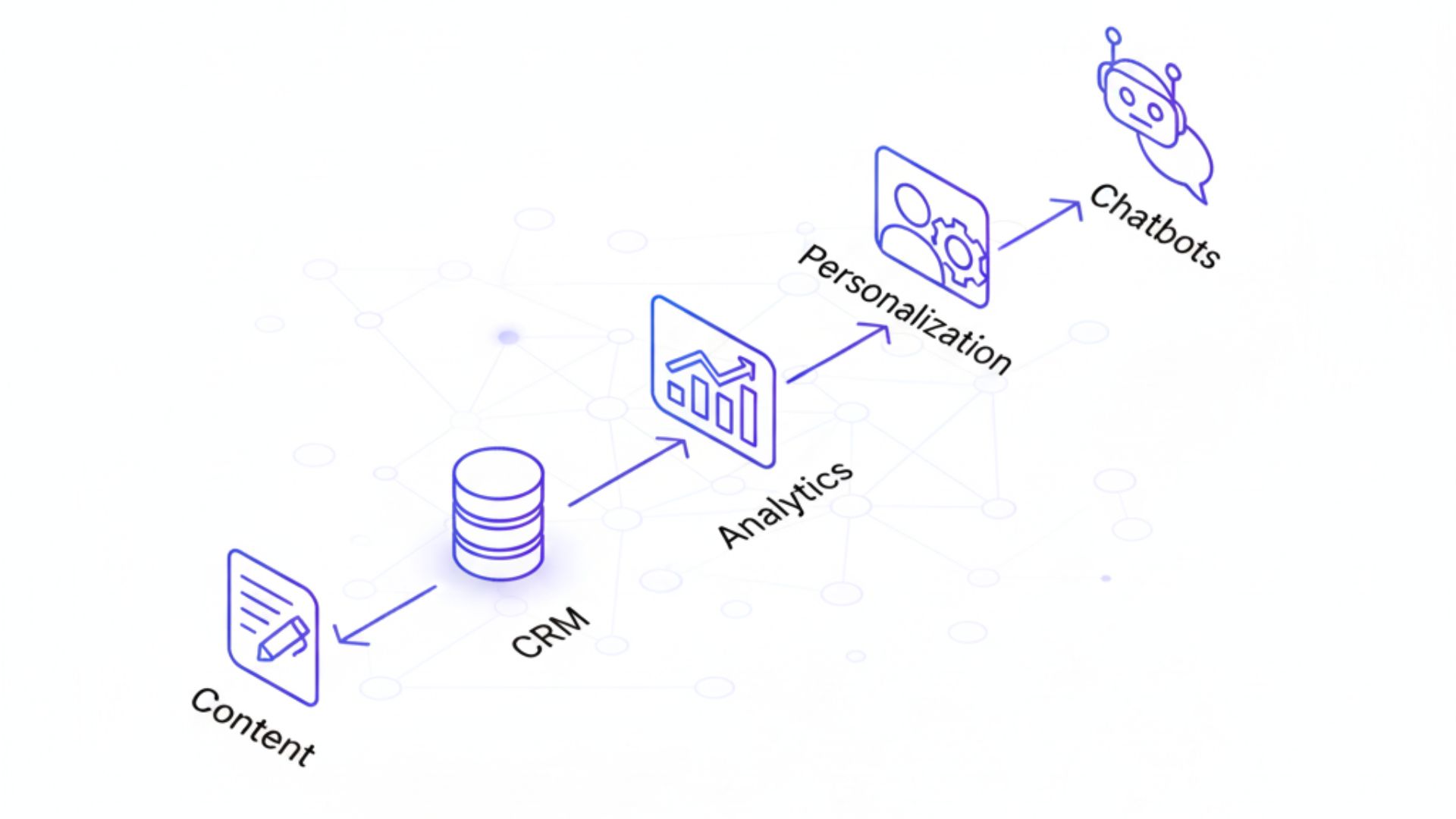
Combine these capabilities and you get automated growth loops. For example, generative AI spins up ad copy variants. Audience prediction tells you which segments to target. Personalization delivers the best version of the ad. Analytics automation measures results and refines the next batch. That is the pattern you should aim for.
Practical use cases: Where AI moves the needle
Not all AI projects are equal. Here are practical use cases I've seen deliver measurable ROI for startups and SaaS teams.
1. Faster content production
Content is still king, but producing it consumes time. Generative AI in marketing speeds up drafts, outlines, and email sequences. I often start with a simple process—outline, draft, edit, optimize-while aligning content with effective social media marketing packages to maximize reach and engagement.The model handles the first two steps. Humans add brand voice and insights.
Example: For a product launch, generate five blog post drafts, three email sequences, and ten ad headlines. You then A/B test the top performers. That A/B test is where the real learning happens, not in letting a model write everything without feedback.
Common mistake: trusting a single AI output. Always iterate and test. The model gives you options, not the final copy.
2. Automated lead scoring and routing
Lead volume is good, but low-quality leads drain time. Marketing automation AI can score leads using behavior signals and product usage data. Route high-scoring leads to sales, nurture lower-scoring ones with targeted sequences.
In my experience, a model that combines CRM data with product events reduces sales time waste by 30 to 50 percent. Make sure your signals are clean first. Garbage in, garbage out still applies.
3. Personalized marketing across channels
Personalized marketing used to mean swapping a first name in an email. Now it means showing different content, CTAs, and journeys based on predicted intent. facebook marketing services powered by AI-driven customer engagement make this level of personalization practical at scale.
Quick example: A user who tries a key feature three times but drops off should see onboarding content that addresses that obstacle. A different email should go to users who cancel after a week. Personalization increases conversion when the triggers and messages align with real friction points.
4. Dynamic creatives and ad optimization
Instead of one static ad, use AI to generate variations and serve the ones that perform best for each audience slice. Generative AI in White Label SEO can produce hundreds of headlines and images quickly. Then an optimization layer learns which combinations work for which audience segment.
Tip: start with constraints. Tell the model your core value propositions and brand guidelines. That reduces brand risk from uncontrolled variations.
5. Conversational agents that convert
Chatbots used to be frustrating. Now they can actually help. AI-based conversations can qualify leads, book meetings, and even handle common objections. When integrated with your CRM, they update contact records and trigger nurture flows.
Common pitfall: over-automation. Customers still want human options. Always offer a way to escalate to a person.
Choosing AI tools for digital marketing
There is an explosion of AI tools for digital marketing; the trick is choosing the right fit. digital marketing agency in tricity, I recommend thinking in three layers.
- Data and infrastructure, where you store events, customer profiles, and content. This is your single source of truth.
- AI services, the models and engines you use for generation, prediction, and personalization.
- Orchestration and delivery, the systems that run campaigns, routes leads, and surface recommendations.
For example, you could have product analytics saved in your data warehouse, use an ML platform to run prediction models, and then use your marketing automation platform to deliver personalized campaigns. Agentia empowers departments to connect those moments and make AI-driven workflows operational, hence they can be executed continuously.
When evaluating vendors, ask these questions:
- How does the tool handle data privacy and access controls?
- Can it integrate with our CRM, product analytics, and CDP?
- Does it support multi-variant testing and tie performance back to revenue?
- How easy is it for non-technical marketers to use?
Don't buy a shiny point solution if it will add integration debt. Look for tools that fit into the three-layer model above.
How to implement marketing automation AI in 90 days
Implementations fail more often from poor scope than from technology limits. Start small and build a repeatable process. Here's a roadmap I use with teams.
Week 1-2: Identify the growth lever
Choose a single goal that can be quantified. For instance: increase the number of trials converted to paid accounts by 15 percent, reduce the sales cycle time by 20 percent, or decrease the cost per acquisition by 10 percent. Make sure the goal is related to revenue.
Why this matters: having a clear north star keeps experiments honest. Without it, you will generate lots of outputs with no way to know what moved the needle.
Week 3-4: Audit data and tools
Map the signals you have. Do you track product events, session data, MQLs, SQLs? Where is customer data stored? Fix the easy gaps. If your event taxonomy is messy, prioritize cleaning it before building complex models.
Quick win example: add two product events that indicate intent such as "created report" or "invoked key API". Those events often predict conversion and are easy to instrument.
Week 5-8: Build a minimal pipeline
Start with a simple predictive model or a content generator plus A/B testing. Connect the model to one channel. For example, use lead score to route sales tasks or use generative AI to create two email sequences for different segments.
Tip: keep manual handoffs in place while validating automation. Let sales or support review a sample of automated outputs for quality control.
Week 9-12: Measure, iterate, and scale
Look at lift against your original goal. If the model improves conversion, expand the scope. Add more channels, refine features, or automate more steps in the flow. Keep experiments short and measurements tight.
Common trap: trying to automate everything at once. That makes it hard to attribute impact, and integrations spiral out of control.
Measuring success and avoiding vanity metrics
Metrics matter. But some are more useful than others. Here's how I think about success metrics for AI-driven marketing.
- Primary metric: revenue impact per channel or campaign, such as ARR growth attributed to the experiment.
- Secondary metrics: conversion rates, trial-to-paid rate, average revenue per account, and lead-to-opportunity ratio.
- Operational metrics: model accuracy, prediction latency, and automation coverage rate.
Be careful with vanity metrics. High content volume or click-through rates look good, but they do not always move revenue. Tie experiments back to a revenue-linked metric and a lead quality metric.
Common implementation pitfalls and how to avoid them
A lot of AI projects fizzle out. Here are mistakes I see again and again, and what to do instead.
Pitfall: Starting with technology instead of a problem
Teams sometimes select a fancy model or tool first, then scramble to find a use. Reverse that. Define the business problem and then pick the model that solves it.
Pitfall: Ignoring data quality
Bad data kills models. Spend time auditing event definitions, cleaning duplicate records, and aligning definitions across tools. It is not glamorous, but it is essential.
Pitfall: Over-automation
Automating an entire customer interaction without human fallback creates poor experiences. Start with partial automation and make escalation simple.
Pitfall: Not measuring lift properly
Attribution is hard. Use holdout groups, incremental testing, or randomized experiments wherever possible. If you cannot isolate impact, you will argue about success forever.
Data privacy, security, and compliance
Privacy is a top concern. Consumers and regulators expect transparency. When you deploy AI that ingests customer data, you must be clear about data use and storage.
Checklist I recommend:
- Document data sources and retention policies.
- Ensure you have lawful basis for processing personal data.
- Use pseudonymization for modeling when possible.
- Monitor model outputs for leakage of personal data.
- Confirm vendor compliance with security standards.
One simple rule of thumb: if a model produces a message that includes private or sensitive content, do not send it without review. That safeguard prevents awkward leaks and legal headaches.
Team and skills: Who you need on the project
You do not need a big data science team to get started. But you do need a multi-disciplinary group that can move quickly.
- Growth lead or product marketer to define the problem and measure outcomes.
- Data engineer to clean and pipe data into models.
- ML or analytics engineer to build predictions and evaluate models.
- Designer and copywriter to ensure outputs meet brand standards.
- Devops or platform engineer for production integrations.
In small teams, people wear multiple hats. I once worked with a two-person marketing team that ran a successful lead scoring pilot by partnering with an analytics contractor for two months. You can move fast with the right priorities.
Examples and simple templates you can copy
Below are a few simple examples you can adapt. Keep them pragmatic and testable.
Email sequence template for intent-based segmentation
Identify two intent triggers, such as "used advanced feature" and "reached trial limit". For each trigger, create a three-email sequence:
- Email 1: A quick tip addressing the friction, short and actionable.
- Email 2: A case study or use case that mirrors their company size or industry.
- Email 3: A soft ask to schedule a call or try an advanced feature, with an easy calendar link.
Use generative AI to create variations. Then run an A/B test on subject lines and CTAs. Keep the copy short. People read on phones.
Lead scoring features to include
- Demographics: company size, industry, role.
- Behavior: key product events, session frequency, time spent on high-value pages.
- Engagement: email opens, demo requests, webinar attendance.
- Firmographic signals: ARR, funding stage, tech stack where available.
Start with a simple logistic regression or tree-based model. You do not need a black-box neural net for good lift here. Interpretability matters for sales trust.
Example prompt for a generative model to create ad copy
Generate 6 ad headlines and 4 short descriptions for a SaaS product that helps teams automate invoicing. Tone: helpful, concise. Target audience: finance managers at startups. Include one headline that addresses reducing late payments.
Simple prompts like this produce useful output. Edit for brand voice and test the variants.
Cost considerations and ROI expectations
Budget varies widely depending on scope. A modest pilot might cost a few thousand dollars for tooling and contractor time. A full production deployment that touches CRM, product, and ads can be much more.
Think in payback time. If AI shortens sales time by 30 percent or raises conversion by 10 percent, you are going to get back tool costs in a very short time, usually within months. Keep a record of the cost per experiment as well as the incremental revenue in order to calculate the return on investment.
Real-world case study (anonymized)
This is a shortened version of an example from a software company where I used to work. Basically, they were in a good place with their product-market fit, however, their sales team was doing the wrong thing by spending too much time on lead qualification. So, we put a three-step plan into action.
- Mapped events that correlate with trial-to-paid conversion.
- Built a simple scoring model and routed high-score leads to sales with a one-click calendar booking.
- Used generative AI to create personalized follow-up emails based on product usage patterns.
Result: sales accepted 40 percent fewer low-quality meetings. Trial-to-paid conversion increased by 12 percent within three months. The setup cost was small because we focused on one funnel and reused content across segments.
That story illustrates a pattern: small focused wins scale when you keep experiments measurable and repeatable.
Emerging trends to watch in 2025
AI keeps evolving. Here are trends I expect marketing teams to lean into this year.
- More privacy-first personalization, using federated learning and on-device computation.
- Generative models that produce richer multimodal creatives, combining images and short video with copy variations.
- Product analytics and CRM need to be more closely integrated so that product signals can directly lead to personalized campaigns.
- Marketing stacks should have model explainability tools embedded in them so that non-technical teams can grasp the reasoning behind a lead scoring a certain way.
These trends are not just shiny tech. They respond to pressure from users and regulators, and they make automated growth more sustainable.
Final checklist before you launch an AI-driven campaign
- Clear goal and primary metric tied to revenue
- Event taxonomy mapped and validated
- Minimal viable model or generative workflow in place
- Human review loop for sensitive outputs
- Measurement plan with holdout group or randomized test
- Privacy and security controls documented
If you have these boxes checked, you are in a good position to run experiments that scale.
Helpful links & next steps
Want help turning these ideas into a repeatable growth engine? Discover how Agentic AI can accelerate your marketing growth : book a free demo today.
If you take one thing away from this post, let it be this: start with a clear problem, use AI to automate the repeatable parts, and keep humans in the loop for judgment. Do that and you will stop chasing shiny results and start building predictable, AI-driven growth.
FAQs: AI in Digital Marketing (2025)
1. What is AI in digital marketing?
AI in digital marketing refers to using artificial intelligence to automate, optimize, and personalize marketing activities such as content creation, customer segmentation, lead scoring, ad optimization, and customer engagement.
2. How is AI used in digital marketing in 2025?
In 2025, AI is used for marketing automation, predictive analytics, personalized campaigns, conversational chatbots, dynamic ad creatives, and automated performance insights across channels.
3. What are the benefits of AI in digital marketing?
AI helps businesses grow faster by saving time, improving targeting, delivering personalized experiences, reducing manual work, and making data-driven decisions that increase conversions and revenue.
4. Can small businesses and startups use AI marketing tools?
Yes. Many AI tools are affordable and scalable, making them ideal for startups and small teams. Businesses can start with simple use cases like AI-generated content or automated lead scoring and expand over time.
5. What is marketing automation AI?
Marketing automation AI uses machine learning and predictive models to automate tasks such as lead qualification, email workflows, customer journeys, and campaign optimization with minimal manual effort.
6. How does generative AI help in marketing?
Generative AI helps marketers create blog drafts, ad copy, emails, social posts, and creative variations quickly. It speeds up production while allowing humans to refine messaging and brand voice.
7. Is AI replacing digital marketers?
No. AI supports marketers by handling repetitive tasks and data analysis. Human marketers are still essential for strategy, creativity, brand judgment, and decision-making.
8. How do you measure success in AI-driven marketing?
Success is measured using revenue-linked metrics such as conversion rate, trial-to-paid growth, cost per acquisition, and ROI, along with operational metrics like automation efficiency and model accuracy.
9. What are the risks of using AI in digital marketing?
Key risks include poor data quality, over-automation, lack of transparency, and privacy issues. These risks can be managed by keeping humans in the loop and following data protection best practices.
10. How can businesses start using AI in digital marketing?
Start with one clear goal, audit your data, run a small AI pilot (such as lead scoring or content generation), measure results, and scale what works over a 90-day implementation plan.