AI Leads Generation for SMBs: Capture, Qualify & Convert Leads Automatically
In case you operate a small or medium-sized enterprise, then you are aware of the suffering caused by lead work. Following up on potential customers, cleaning up disorganized lists, and trying to figure out who is ready to make a purchase consume a lot of time and resources. I've noticed many teams waste their best salespeople on low-value tasks. That is where AI lead automation helps, when done right it captures more leads, qualifies them automatically, and gets your sales team talking to the right people at the right time.
This guide walks through practical steps and real tactics for AI-powered lead generation. No fluff. I share simple examples, common mistakes to avoid, and a clear path you can follow this month to start improving sales efficiency with AI sales tools and AI marketing software.
Why AI for Lead Generation Matters to SMBs
Small and medium enterprises, in most cases, have to manage their operations with restricted financial resources and small workforce sizes. They require cost-effective tools that will naturally grow with their business. One such tool that does so is lead generation supported by AI technology which works by automating the tedious tasks and turning a larger number of website visitors and ad clicks into meaningful dialogues with potential customers.
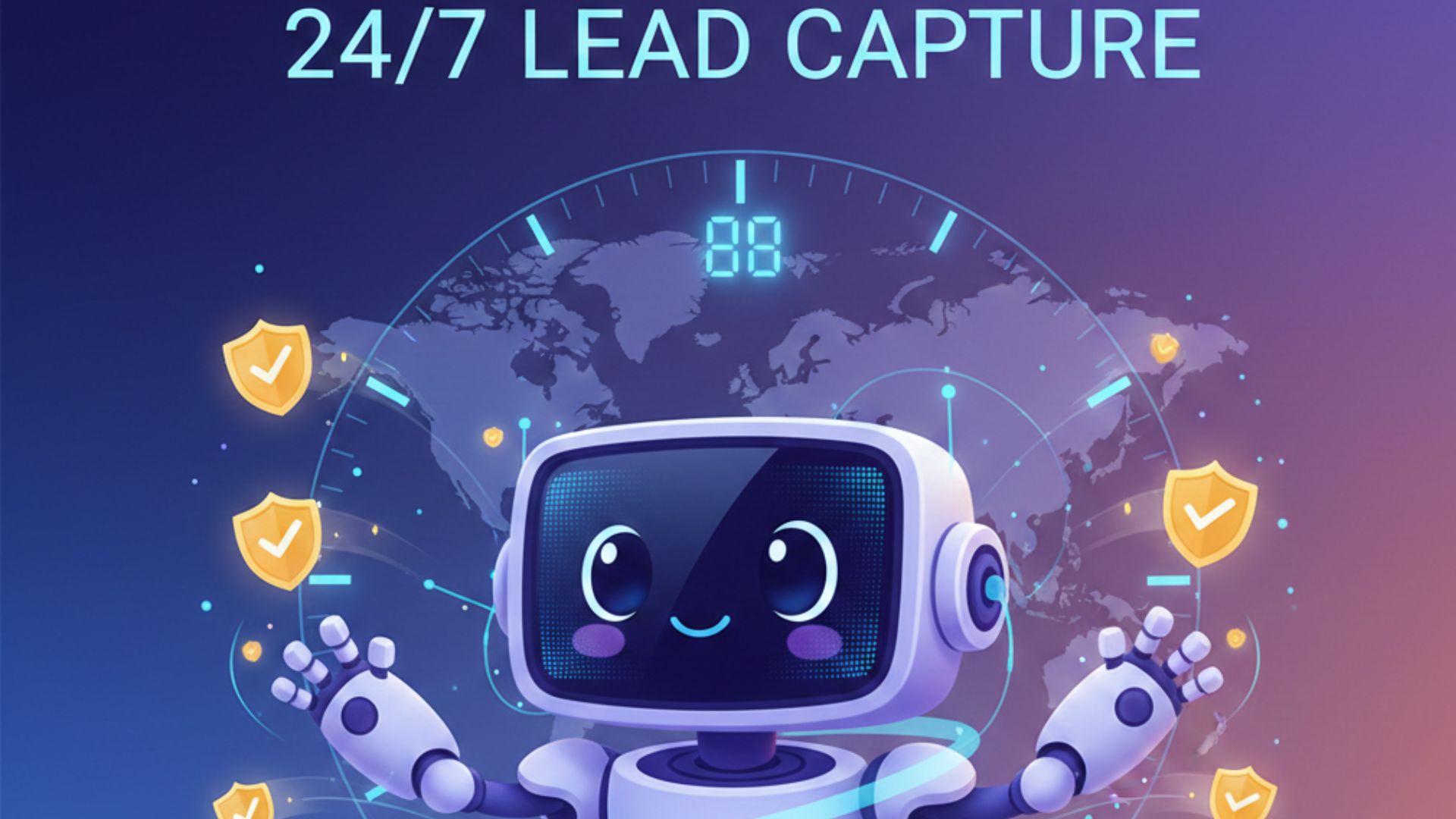
- Capture leads 24-7 with chatbots and smart forms.
- Qualify leads automatically so reps focus on the best opportunities.
- Personalize outreach at scale without hiring a bigger team.
- Measure and iterate faster with data-driven scoring and analytics.
I've worked with teams that went from responding to customers in 48 hours to under five minutes. The result was higher conversion rates and less wasted effort. That matters when every lead counts.
How AI Captures Leads Automatically
Capture is simply making it easy for someone to tell you they are interested. With AI, capture can be proactive and adaptive instead of passive. Below are the most effective capture channels for SMBs and how AI improves them.
1. Conversational Chatbots on Your Website
Chatbots have become more intelligent. Today's bots are capable of using NLP to determine the user's intentions and to pose appropriate questions. A bot can engage in a conversation and even answer objections while recommending resources or scheduling demos, instead of just being a cold form.
Example: A visitor arrives at your pricing page. A chatbot pops up and says, "Hey, do you want a quick quote or a demo?" The visitor says demo. The bot asks three qualifying questions, pulls contact info, and books a demo if the lead meets basic criteria.
That interaction captures the lead and starts an automated qualification flow. No one had to open a CRM to log anything.
2. Smart Forms and Progressive Profiling
Forms are still core. But progressive profiling makes forms less painful. Start with one or two fields. Then ask more on subsequent visits. AI chooses which questions to show based on what the system already knows.
Practical tip: ask only what's necessary up front. Get name and email. Ask industry and company size later when the lead revisits or engages again. You're more likely to get a completed form this way.
3. Social and Ad Interaction Tracking
AI monitors signals from ads and social posts, not just clicks. It can detect whether someone who clicked is a decision maker or just browsing. That allows you to change the follow-up flow — send a case study to casual visitors, route hot signups to sales immediately.
Tools can stitch together behavior across platforms, so you know if a lead saw your ad, visited pricing, then returned via organic search. That cross-channel context increases conversion.
4. Email Capture and Inbound Messages
Inbound emails or messages from LinkedIn and contact forms can be triaged by automation. AI classifies intent, extracts contact details, and assigns a score. Then it either notifies a rep or triggers a nurturing sequence.
I've seen teams save hours per week by automating email triage. The human only handles the high-priority ones.
Automated Lead Qualification: From Data to Decisions
Collecting leads is easy. Knowing which leads matter is the hard part. Automated lead qualification uses rules, scoring models, and machine learning to rank leads by likelihood to convert, including inputs captured by an IVR service provider during inbound and outbound calls.
Lead Scoring Basics
Lead scoring merges data that is explicit like job title, size of the company, and industry with data that is implicit such as the number of pages viewed, content downloaded, and the duration of the visit. AI can weight these signals dynamically.
For instance, when a prospect with the title "Operations Manager" visits your pricing page two times and looks at a product video, grant him/her/him a better score than the one who only did a whitepaper download.
Don't overcomplicate scoring. Start with a few high-value signals and refine monthly.
Digital advertising solutions now integrate creative analytics, ad inspiration, competitor monitoring, and bulk campaign management into a seamless workflow platform.
Intent Detection and Behavioral Signals
Intent detection looks for patterns that indicate buying readiness. AI models learn from past conversions. They notice that users who view pricing and competitor comparison content tend to close faster.
The merging of intent detection and lead scoring results in an efficient filter. The leads, who display a significant intent, are the ones that can be given priority for either immediate outreach or receiving an automated calendar invite.
Automated Qualification Workflows
Once a lead hits a score threshold the system can take actions automatically. Actions include:
- Sending a personalized email or SMS
- Triggering a sequence with tailored content
- Booking a demo time with a calendar link
- Creating a task for a salesperson to follow up
That handoff makes your sales process smoother. The rep gets a warm lead with context, not a cold contact with no history.
AI Sales Tools that Close Deals Faster
There is a healthy ecosystem of AI sales tools that do different things. You do not need every tool. Focus on the capabilities that directly improve your conversion time and sales efficiency.
- Conversational AI for real-time interaction
- Lead enrichment services to fill in missing company details
- Predictive lead scoring to prioritize follow-up
- CRM automation so leads flow into your pipeline correctly
In my experience, a combo of a conversational bot plus a lightweight scoring engine gives the best returns for SMBs. It covers capture and qualification without adding too much complexity.
Data Enrichment and Accurate Contact Info
Automation relies on clean data. The first call I make when implementing AI lead automation is to decide how we enrich records. Enrichment tools automatically add company size, role, location, and tech stack from an email or domain.
Why it matters: A lead with the role of "CEO" in a company with 30 employees should be treated differently than a "Manager" in a company with 300. Such granularity enhances the efficiency of targeting and sales.
Common enrichment providers include Clearbit and similar services. Pick one that integrates with your CRM and has an API. Test it on a sample of your leads before rolling it out.
Integrations and Workflow Automation
AI-powered lead generation only works when systems talk to each other. Your website, chatbot, ad platforms, CRM, email provider, and calendar need to be connected.
The choices for integration are wide-ranging from native connectors through the middleware of Zapier or custom webhooks. My principle is: make automatic those transfers which are the most time-consuming and the least error-prone.
Example flow:
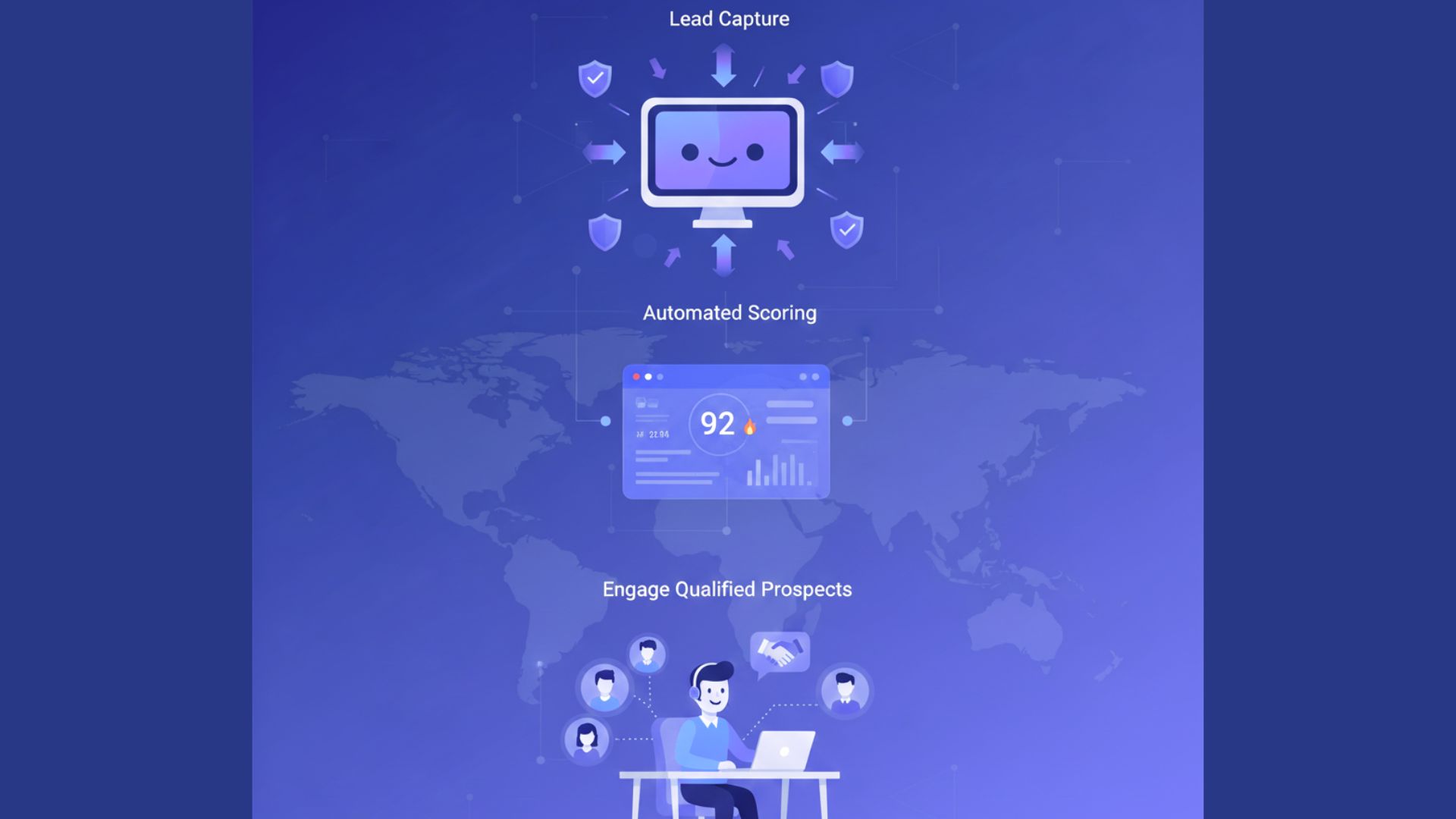
- Visitor engages with chatbot and indicates interest.
- Bot captures email and asks qualifying questions.
- System enriches the lead and runs a scoring model.
- If the score is high the system sends a calendar invite and notifies the rep.
- If the score is medium the lead enters a nurturing sequence.
- All events log into CRM for reporting.
That flow eliminates copy and paste, increases speed, and ensures reps see relevant history before they call.
Conversational Design: Keep It Human
If you permit it, AI might come across as robotic. A conversational design turns the entire process into one with a friendly human rather than a script. Keep your messages concise, use contractions, and provide context so the potential customer understands the reason behind your question.
Example of a poor opening: "Please select your interest area." Better: "Hi, I'm Alex. Do you want a quick quote or a live demo?" The second one guides the visitor and feels more natural.
One technique I find useful is to foresee objections. In case a potential customer mentions that they require pricing, the virtual assistant may reply, "We can offer a rough estimate right now. Is there any range of budget you could share with us?" This way, the interaction does not freeze but rather continues.
Common Mistakes to Avoid
Automation brings speed, but it can also amplify mistakes. Here are pitfalls I see often and how to avoid them.
- Over-automation. Automating everything leads to odd customer experiences. Keep humans in the loop for complex decisions.
- Poor data quality. Bad enrichment or duplicate leads break scoring. Clean your lists before automation.
- One-size-fits-all messaging. Personalize. Even a token personalization gets better results.
- Not measuring outcomes. Track conversion rates, response time, and lead-to-opportunity ratios. If you don’t measure you can’t improve.
- Neglecting compliance. Ensure your capture forms and emails follow privacy regulations in your target markets.
Measuring ROI: What to Track
When I help a team set up AI lead automation we pick a handful of KPIs to watch closely. Track too many metrics and you lose focus.
- Lead capture rate. How many visitors become leads?
- Response time. Average time from first contact to reply.
- Lead-to-opportunity rate. What fraction of leads become sales opportunities?
- Conversion rate. How many opportunities close?
- Sales cycle length. Does automation shorten the time to close?
- Cost per lead. Are you getting high-quality leads at an acceptable price?
Improving any of these improves profitability. Often your first wins will be lower response time and higher lead-to-opportunity rates because the right leads get handled immediately.
Simple Implementation Roadmap for SMBs
Start small, measure impact, then scale. Here’s a five-step plan you can follow in under 90 days.
- Audit your current funnel. Map how leads enter and where they drop off. I usually run a quick workshop with marketing and sales to document the current state.
- Define your ideal customer profile, and 3 scoring signals to start with. Keep it simple. For example: job title, company size, and visits to pricing.
- Deploy capture tools like a conversational bot on high-traffic pages and a smart form on gated content.
- Set up automated qualification. Use a scoring engine and intent detection to route leads to sales, nurture, or self-service.
- Measure and iterate. Run a 30-day test, review the KPIs, and tweak scoring, messaging, and workflows.
If you can do those five things you will already see better sales efficiency. Don’t try to automate everything on day one.
Real-World Example: Local IT Services Firm
Let's have a straightforward illustration that demonstrates the integration of the elements. The IT company in the area sought to attract additional managed-services clients without the need to employ a new sales representative.
- They added a website bot that asked three questions: company size, current IT pain point, and whether they manage IT in-house.
- Leads that matched their SMB profile and mentioned "slow support" got immediate calendar links for a 15-minute discovery call.
- Other leads were sent a short email with a case study and an invite to book if they wanted a demo later.
- They enriched leads with company size and tech stack data. High-value leads got routed to their best rep.
Result: The response times to top leads had dropped from 2 days to less than 30 minutes...and it helped increase lead-to-sales conversion by 40%. They only needed minor staff adjustments to handle the extra qualified conversations.
Choosing the Right AI Sales Tools
There is no single best tool for everyone. Pick the tools that solve your most painful bottleneck. If your problem is capture, invest in a strong chatbot and form solution. If your problem is prioritization, focus on an automated lead qualification platform.
Questions to ask vendors:
- How does the tool integrate with my CRM?
- Can I customize scoring rules and messaging?
- How do they handle data privacy and compliance?
- What support and onboarding are included?
Many SMBs start with a proven conversational AI and a scoring add-on. These choices typically give the fastest impact.
Privacy and Compliance: Do Not Ignore It
Whenever data gathering occurs, it brings along responsibilities. Integrate consent requests in the forms and bots utilized by you and assure that you conform to the local privacy laws. If the customers you are targeting are in the EU, then include opt-ins that are compliant with GDPR. For California consider CCPA requirements.
Simple steps help a lot: keep consent logs, allow data export, and make unsubscribing easy. Your prospects appreciate transparency and it keeps legal problems away.
Scaling and Continuous Improvement
Automation is not set-and-forget. Monitor performance weekly at first. Adjust scoring thresholds and conversational scripts based on what converts. Use A/B testing for message variations.
As you add more data you can introduce more advanced AI features, like predictive churn scoring or multi-touch attribution. But only add complexity when you can measure benefit from it.
Final Checklist Before You Launch
- Mapped your funnel and chosen priority improvement area.
- Defined a small set of scoring signals and target thresholds.
- Deployed capture tools where traffic is highest.
- Connected enrichment and CRM integrations.
- Set up automated routing and basic nurture sequences.
- Defined KPIs and a 30-day measurement window.
- Ensured basic privacy and consent controls are in place.
That checklist keeps launches focused and reduces the usual chaos.
Wrapping Up: Where to Start
If you are building AI-powered lead generation for the first time, start with two things: capture and qualification. Get a conversational bot on your top landing page and add a simple scoring rule in your CRM or AI sales tool.
In my experience, that two-piece approach gets your team immediate wins. You'll see faster replies, better-qualified meetings, and higher close rates without a product reviews and recommendations.
AI-powered lead automation is not a miraculous solution, but it definitely acts like a force multiplier. By automating the appropriate tasks you allow the human element to do what it is best at: establishing connections and sealing agreements.
Helpful Links & Next Steps
- Agentia - AI lead automation and sales efficiency solutions
- Agentia Blog - More guides and case studies
If you want hands-on help, I recommend starting with a short audit of your funnel. Agentia helps SMBs set up capture, automated lead qualification, and integrations so you can convert more leads without hiring more people.
Get Started with AI Leads Today
Frequently Asked Questions (FAQs)
1. What is AI lead generation?
AI lead generation uses artificial intelligence to automatically capture, qualify, and prioritize leads by analyzing visitor behavior, intent signals, and customer data, helping sales teams focus on high-quality prospects.
2. How does AI lead automation help SMBs?
AI lead automation reduces manual work by handling lead capture, scoring, follow-ups, and routing. This allows SMBs to respond faster, improve conversion rates, and scale sales without hiring additional staff.
3. Are AI lead generation tools expensive for small businesses?
Most modern AI lead generation tools are affordable and scalable. SMBs can start with basic chatbots and lead scoring features and upgrade as their pipeline and revenue grow.
4. How do AI chatbots capture leads?
AI chatbots engage visitors in real time, ask qualifying questions, collect contact information, and route high-intent leads directly to sales or demo booking flows—24/7.
5. What is automated lead qualification?
Automated lead qualification uses AI-based scoring and intent detection to rank leads based on factors like job role, company size, engagement behavior, and buying signals.
6. Can AI really improve lead quality?
Yes. By analyzing behavioral data and historical conversions, AI identifies leads that are most likely to buy, reducing time spent on unqualified prospects.
7. Do AI lead generation tools integrate with CRMs?
Most AI sales tools integrate with popular CRMs like HubSpot, Salesforce, and Zoho, ensuring leads flow automatically into your pipeline with full context.
8. Is AI lead generation compliant with data privacy laws?
When implemented correctly, AI lead generation tools support GDPR, CCPA, and other privacy regulations through consent capture, opt-ins, and secure data handling.
9. How long does it take to see results from AI lead automation?
Many SMBs see improvements in response time and lead quality within 30 days, especially when starting with chatbots and basic lead scoring.
10. What is the best way to start with AI-powered lead generation?
Start by adding a conversational chatbot to high-traffic pages and implementing simple lead scoring rules. Measure results for 30 days, then expand automation gradually.